Quantifying the Edge: How Sophisticated Players Use Data Analytics to Compete at the Highest Level
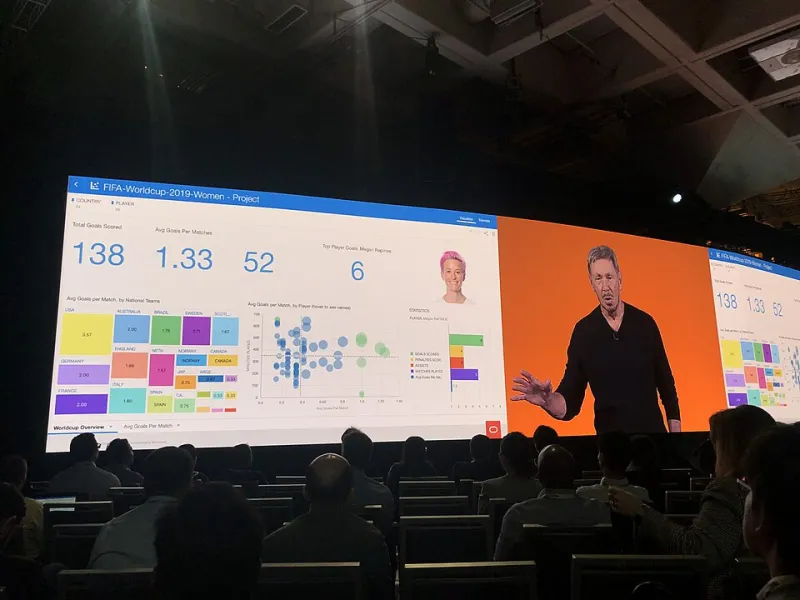
Photo: GeneralAB13, CC BY-SA 4.0, via Wikimedia Commons
The most consequential shift in competitive gaming over the past decade has not been a change in game mechanics or platform design. It has been the migration of serious players from instinct-based decision-making toward a rigorous, data-driven analytical framework. Where a previous generation of high-stakes competitors relied on experience, pattern recognition, and accumulated intuition, today's elite practitioners treat every session as a data-generation event — raw material to be processed, modeled, and converted into durable competitive advantage.
Understanding how this analytical infrastructure actually operates, and how premium platforms either enable or constrain a player's ability to build it, is essential knowledge for anyone competing at a serious level.
The Session Review as a Primary Data Collection Mechanism
The foundation of any sophisticated analytical practice is the systematic session review. This is not the casual post-session reflection that most recreational players perform — a rough mental accounting of wins, losses, and notable hands or outcomes. It is a structured, documented process designed to extract the maximum informational value from each period of play.
Effective session reviews capture granular data across multiple dimensions: session duration, stake levels, game variants, decision points and the reasoning applied at each, observed variance relative to expected variance, and emotional state indicators that might correlate with performance degradation. Over time, this accumulated record becomes a proprietary database — one that reveals patterns invisible to players who treat each session as an isolated event.
The most analytically sophisticated players develop standardized logging templates that allow for consistent data capture across sessions, enabling meaningful longitudinal comparisons. They track not only outcomes but decision quality independently of outcomes — a critical distinction that separates genuine analytical rigor from simple results-based evaluation.
Variance Modeling: Understanding the Statistical Envelope of Your Play
One of the most powerful applications of accumulated session data is variance modeling — the process of constructing a realistic statistical envelope around expected performance outcomes at a given stake level and game type.
Variance modeling serves several strategic functions. It allows players to distinguish genuine performance shifts from normal statistical fluctuation, preventing the costly error of abandoning a sound strategy during a losing sequence that falls within expected variance parameters. It also enables more precise bankroll sizing decisions, since a player who has modeled their actual variance profile can calculate with mathematical rigor the bankroll required to sustain their intended stake levels through realistic drawdown scenarios.
The construction of a variance model begins with sufficient sample size — a data set large enough to yield statistically meaningful estimates of standard deviation around expected value. For most game categories, this requires patient, disciplined record-keeping across hundreds of sessions before the model achieves reliability. Players who attempt to draw conclusions from small samples are not practicing analytics; they are practicing a more sophisticated form of the same confirmation bias that afflicts recreational players.
Identifying Exploitable Patterns in Historical Data
Beyond performance self-analysis, sophisticated players apply data analytics to the identification of structural patterns in game behavior that represent exploitable inefficiencies. This practice varies considerably in application depending on the game category, but the underlying methodology shares common elements.
The process begins with hypothesis formation — the articulation of a specific, testable proposition about a potential pattern or inefficiency. It proceeds through systematic data collection designed to either confirm or refute the hypothesis, followed by statistical analysis to assess whether observed patterns exceed what chance alone would produce. Only hypotheses that survive rigorous testing are incorporated into active strategy.
This discipline — the willingness to discard hypotheses that the data fails to support — is what separates genuine analytical practice from the selective data interpretation that cognitive biases naturally encourage. Elite players understand that the value of an analytical framework lies precisely in its capacity to override comfortable narratives when the evidence demands it.
How Premium Platform Access Shapes Analytical Capability
The platform on which a player competes is not analytically neutral. The quality, depth, and accessibility of the data that a platform makes available to its members directly determines the ceiling of their analytical practice.
Premium platforms serving serious high-stakes players provide analytical infrastructure that mass-market operators simply do not offer. This includes comprehensive, exportable session histories with granular transaction-level detail; real-time performance dashboards that allow players to monitor key metrics during active play; and historical data archives that extend far enough back to support meaningful longitudinal analysis.
Beyond raw data access, elite platforms invest in the interpretive tools that allow players to convert data into actionable intelligence. This means sophisticated filtering capabilities, customizable reporting frameworks, and in some cases dedicated analytical support through account management channels — resources that allow serious players to spend their analytical energy on interpretation rather than data assembly.
At U888 VIP Elite, the analytical infrastructure available to members reflects a deliberate commitment to supporting data-driven competitive practice. The platform recognizes that serious players are not seeking entertainment — they are conducting a disciplined competitive enterprise, and they require tools commensurate with that objective.
Integrating External Analytical Tools
Beyond the native analytics provided by a platform, sophisticated players increasingly augment their practice with external tools — spreadsheet-based modeling systems, purpose-built gaming analytics software, and statistical programming environments that allow for custom analysis beyond what any platform's built-in reporting can provide.
The integration of external tools requires that a platform provide data in formats amenable to export and manipulation. This is itself a meaningful differentiator between platforms that genuinely support serious play and those that treat analytical access as a secondary concern. A platform that makes it difficult or impossible to extract session data in usable formats is, whether intentionally or not, constraining the analytical practice of its most serious members.
The Compounding Return on Analytical Investment
The strategic case for investing in analytical infrastructure is ultimately a compounding argument. The insights generated by rigorous data analysis improve decision-making quality, which improves outcomes, which generates richer data for subsequent analysis. Over a meaningful time horizon, the player who has built and maintained a serious analytical practice operates with an increasingly substantial informational advantage over competitors who rely on intuition and experience alone.
This is not a marginal distinction. In competitive gaming environments where edges are measured in fractions of a percentage point, the systematic application of data analytics represents one of the few durable, scalable sources of advantage available to serious players. Treating it as a peripheral activity rather than a core strategic discipline is a decision that carries real competitive cost.